
How to Do R U OK? Day and Mental Health Month Well
Every year, the calendar fills with mental health awareness moments: R U OK? Day in September, then Mental Health Month and Mental Health Week in October. Most workplaces mark them with morning teas, posters and a well-meaning email from HR.
Then the day passes, and the conversations stop.
Awareness matters, but it's the starting line. The real question is what your people can do on Monday morning that they couldn't do the Friday before. Here's how to make these moments count.
Why awareness alone isn't enough
Most people already know mental health matters. What they often lack is the confidence to act on it. They worry about saying the wrong thing, making it worse, or overstepping. So they say nothing.
Awareness days are a rare moment when the topic is permitted and expected. Used well, they give people a safe opportunity to practise skills, not just absorb messages.
How to have an R U OK? conversation well
R U OK? gives us a simple, reliable framework. Whether you're a team leader or a colleague, the steps are the same.
1. Ask. Choose a private, low-pressure moment. Be specific and genuine: "You've seemed quieter lately. How are you going?" Asking directly about concerns doesn't plant ideas or make things worse.
2. Listen. Give the person time to answer. Resist the urge to fix, reassure or share your own story. Silence is fine. Acknowledge what you hear: "That sounds really draining."
3. Encourage action. Ask what would help, and what support they already have. This could be a GP, an EAP, a trusted friend, or Lifeline on 13 11 14. You're not diagnosing or solving. You're helping them take a next step.
4. Check in. Follow up within a few days. This step is the one most often skipped, and it's often the one that matters most. It tells the person they weren't just a box ticked.
What workplaces can do
A single day can't carry the load. Here's what tends to make the difference:
Train people, not just inform them. A poster can't teach someone how to respond when a colleague says "not really." Skills-based training such as Mental Health First Aid gives people a practical framework and the confidence to use it.
Equip leaders first. Team leaders set the tone. When they model openness and know how to respond, everyone else follows.
Make the conversation easy. Build regular check-ins into existing rhythms like one-on-ones and team meetings, so asking "how are you really?" isn't a special occasion.
Know your pathways. People can only be pointed to support if managers know what exists: EAP, internal contacts, external services, and after-hours options.
Look at the conditions, too. Workload, role clarity and culture shape wellbeing as much as individual conversations do. Kindness can't compensate for an unsustainable job.
Common pitfalls
Treating the event as the strategy
Relying on one enthusiastic person to carry the culture
Asking "R U OK?" and having no idea what to do with the answer
Making participation feel compulsory, or emotionally exposing
Skipping the follow-up
Making it stick
Awareness days work best when they're a launch point. Use them to introduce training, refresh your support pathways, or start a regular check-in habit. Then measure what changes: participation, confidence, help-seeking and manager capability, not just attendance at the morning tea.
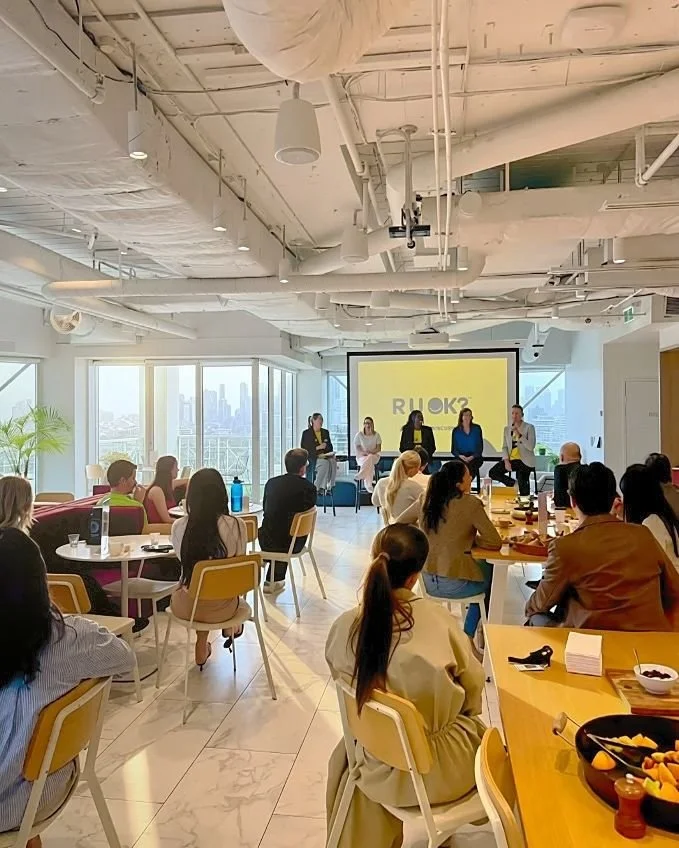
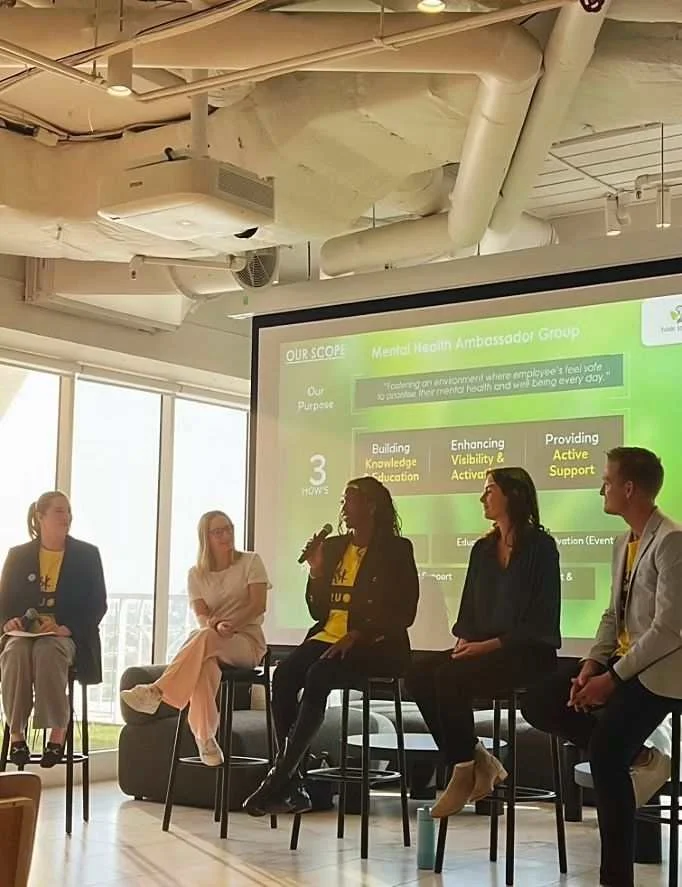
[Optional panel section: Wellbeing Campus was recently part of the R U OK? panel at L'Oréal, where [1-2 sentences on the key theme, e.g. what leaders can do year-round, not just on the day]. Add a key takeaway or quote here.]
If your workplace wants to move from awareness to action, Wellbeing Campus offers Mental Health First Aid and workplace training that gives your people practical skills to support each other, every day of the year.
If you or someone you know needs support, contact Lifeline on 13 11 14. In an emergency, call 000.